Zeppelin-Staaken R.VI
Overview
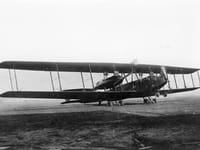
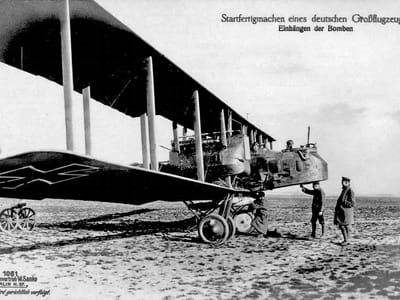
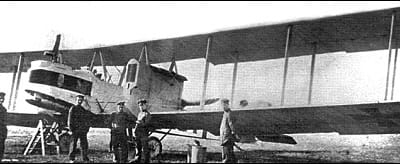
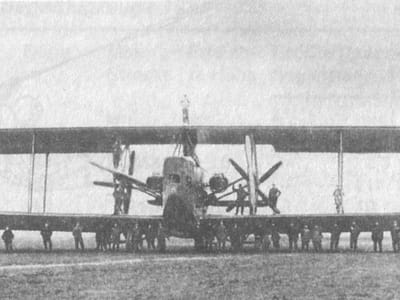
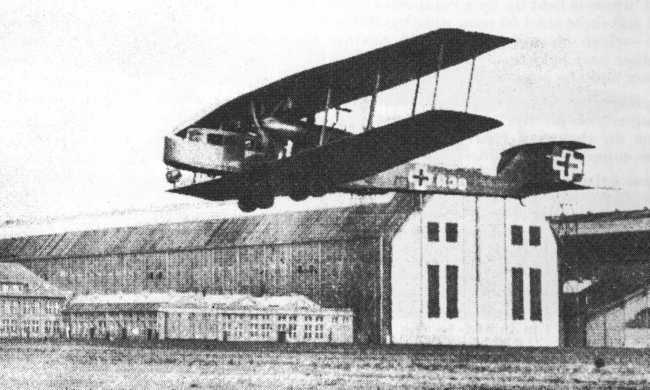
The Zeppelin-Staaken R.VI was a four-engined German biplane strategic bomber of World War I, and the only Riesenflugzeug (giant aircraft) design built in any quantity. The R.VI was the most numerous of the R-Bombers built by Germany, and also among the earliest closed-cockpit military aircraft (the first being the Russian Sikorsky Ilya Muromets). The bomber was reputedly the largest wooden aircraft to be produced in any quantity during World War I, with only the Siemens-Schuckert R.VIII prototype bomber of 1916–1919 being larger, and with the Staaken R.VI's wingspan of 42.2 m (138 ft) nearly equaling that of the World War II Boeing B-29 Superfortress, although significantly less than the 48 m (157 ft) span of the Siemens-Schuckert R.VIII.