Mitsubishi G4M
Overview
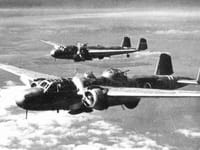
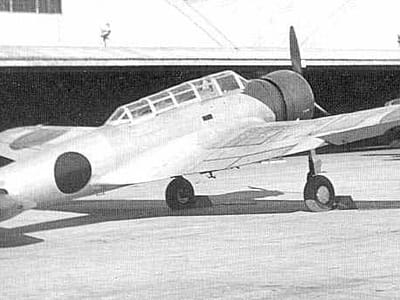
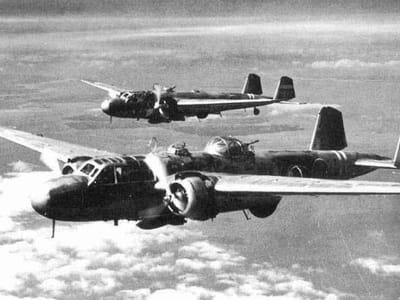
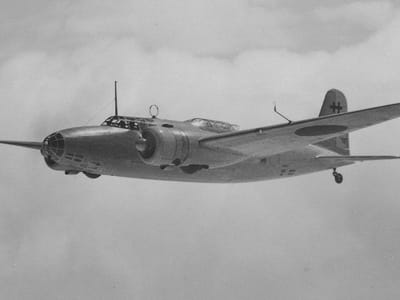
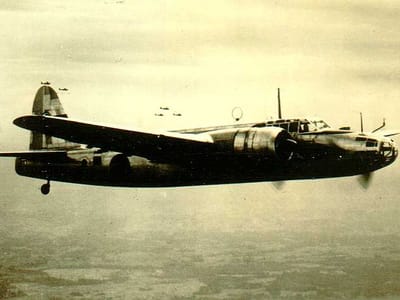
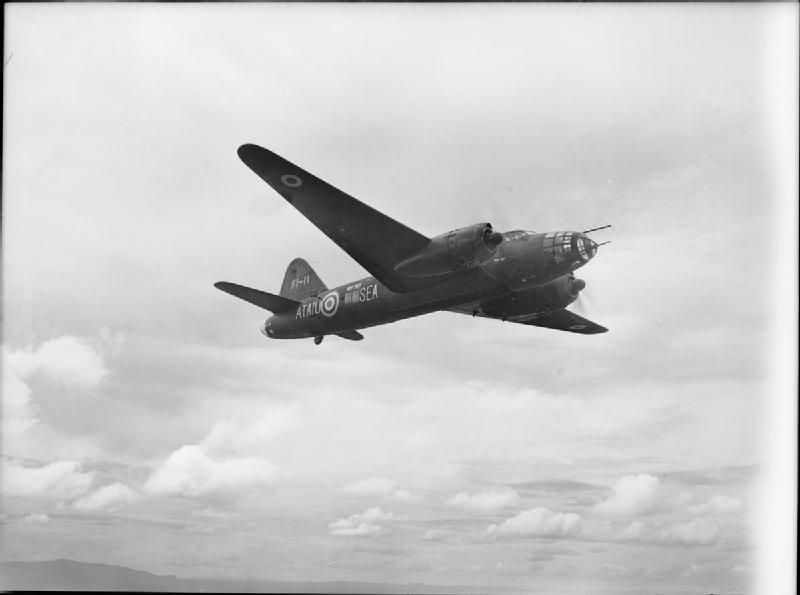
The Mitsubishi G4M was a twin-engine, land-based medium bomber manufactured by the Mitsubishi Aircraft Company, a part of Mitsubishi Heavy Industries, and operated by the Air Service (IJNAS) of the Imperial Japanese Navy from 1940 to 1945. Its official designation was Mitsubishi Navy Type 1 attack bomber (一式陸上攻撃機, 一式陸攻, Ichishiki rikujō kōgeki ki, Isshikirikukō) and was commonly referred to by Japanese Navy pilots as Hamaki (葉巻; "cigar", lit. "leaf roll") due to the cylindrical shape of its fuselage and its tendency to ignite after a hit. The Allied reporting name was "Betty". Designed to succeed the Mitsubishi G3M in service, the G4M boasted good performance, excellent range and was considered the best land-based naval bomber of the time. This was achieved with flimsy structure and almost total lack of crew protection, with no armor plating or self-sealing fuel tanks. The G4M was introduced on 2 April 1941, but its problems would result in heavy losses; Allied fighter pilots nicknamed the G4M "The Flying Lighter", as it was prone to ignition after a few hits. It was not until later variants of the G4M2 and G4M3 that self-sealing fuel tanks, armor protection for the crew and better defensive armament were installed. Nevertheless, the G4M would become the IJNAS' primary land-based bomber. It was the most widely produced and most famous bomber flown by the Japanese during World War II and it served in nearly all battles during the Pacific War. Attacks by G4M and G3M bombers resulted in the sinking of the Royal Navy battleship HMS Prince of Wales and battlecruiser HMS Repulse, the first time capital ships actively defending themselves were sunk solely by air power while in the open sea. G4Ms and G3Ms were also credited with sinking the heavy cruiser USS Chicago during the Battle of Rennell Island. Those aircraft later served as mother ships that carried the Yokosuka MXY-7 Ohka, a purpose-built anti-ship suicide weapon during the final years of the war. A heavy fighter derivative, the Mitsubishi G6M1, was developed in 1940 for use as a long-range escort fighter by the IJNAS; the design was never utilized in the escort role, with the roughly 30 production models instead being employed as transport aircraft. Of the 2,435 G4Ms produced, no fully intact aircraft have survived, though several airframes exist as unrestored wreckage or in partial states of restoration.