McDonnell Douglas F/A-18 Hornet
Overview
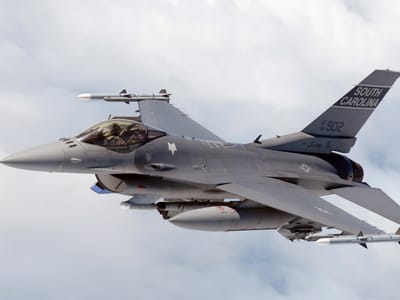
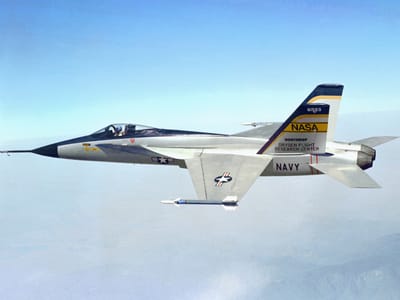
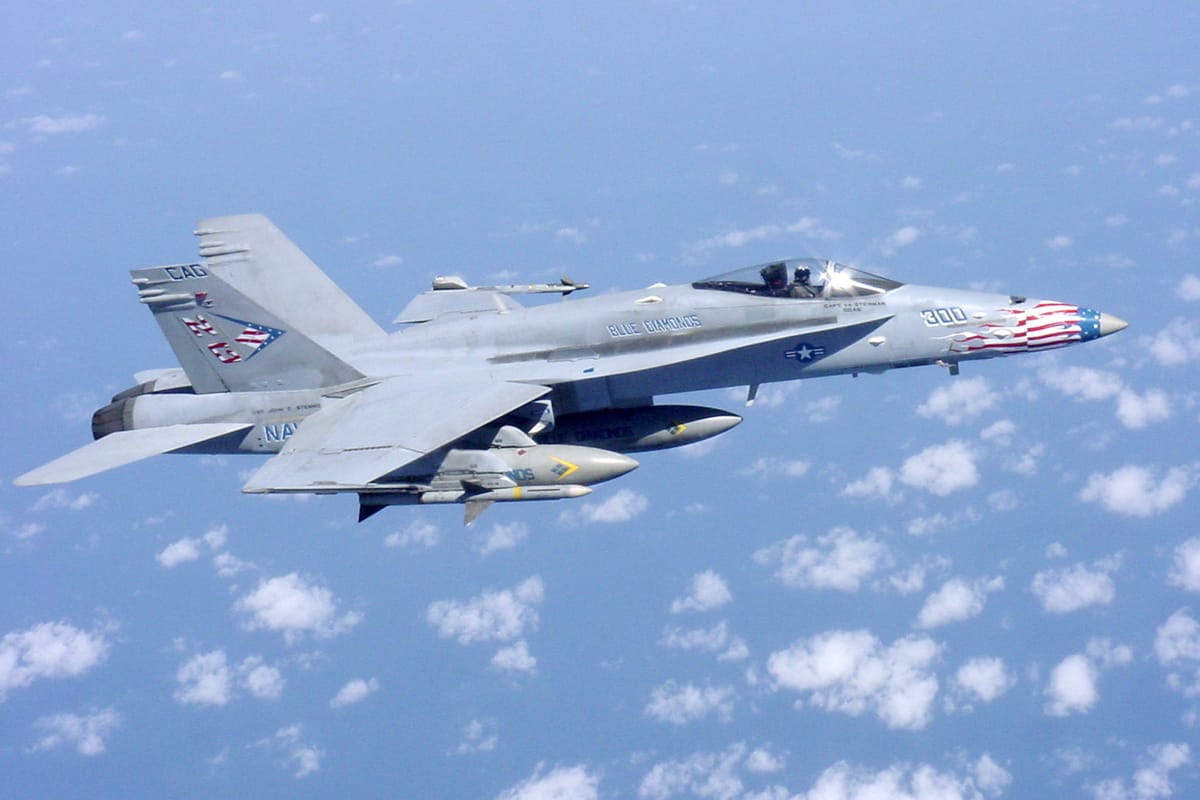
The McDonnell Douglas F/A-18 Hornet is an all-weather supersonic, twin-engined, carrier-capable, multirole combat aircraft, designed as both a fighter and ground attack aircraft (hence the F/A designation). Designed by McDonnell Douglas and Northrop, the F/A-18 was derived from the YF-17 that lost against the YF-16 in the United States Air Force's lightweight fighter program. The United States Navy selected the YF-17 for the Navy Air Combat Fighter program, further developed the design and renamed it F/A-18; the United States Marine Corps would also adopt the aircraft. The Hornet is also used by the air forces of several other nations, and formerly by the U.S. Navy's Flight Demonstration Squadron, the Blue Angels. The F/A-18 was designed to be a highly versatile aircraft due to its avionics, cockpit displays, and excellent aerodynamic characteristics for high angles-of-attack maneuvers, with the ability to carry a wide variety of weapons. The aircraft can perform fighter escort, fleet air defense, suppression of enemy air defenses, air interdiction, close air support, and aerial reconnaissance. Its versatility and reliability have proven it to be a valuable carrier asset. The Hornet entered operational service with the U.S. Navy in 1983, gradually replacing the A-7 Corsair II and the remaining F-4 Phantom IIs. The aircraft first saw combat action during the 1986 United States bombing of Libya and subsequently participated in the 1991 Gulf War, operations over Bosnia and Kosovo in the 1990s, and in the 2003 Iraq War as well as follow-on operations in the Middle East. The F/A-18 Hornet served as the baseline for the F/A-18E/F Super Hornet, its larger, evolutionary redesign, which supplanted both the older Hornet and the F-14 Tomcat in the U.S. Navy. The remaining legacy Navy Hornets were retired in 2019 with the fielding of the F-35C Lightning II.