Low Cost Autonomous Attack System
Overview
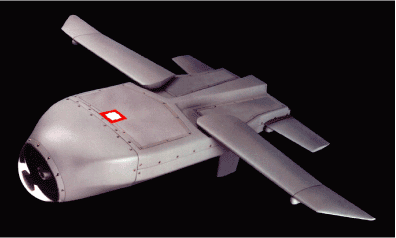
The Low Cost Autonomous Attack System (LOCAAS) was a loitering attack munition developed for the United States Air Force (USAF). In 1998 the USAF and U.S. Army Lockheed Martin began to examine the feasibility of a small, affordable cruise missile weapon for use against armoured and unarmoured vehicles, materiel and personnel, and if so develop a demonstration program. The program cost approximately $150,000,000; the cost per unit was calculated to be $30,000 based on a production of 12,000 units before cancellation. After being launched from a weapon platform, it is guided by GPS/INS to the target general area, where it can loiter. A laser radar (LIDAR or LADAR) illuminates the targets, determines their range, and matches their 3-D geometry with pre-loaded signatures. The LOCAAS system then selects the highest priority target and selects the warhead's mode for the best effect. The LOCAAS program was cancelled.