Henschel Hs 123
Overview
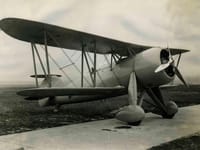
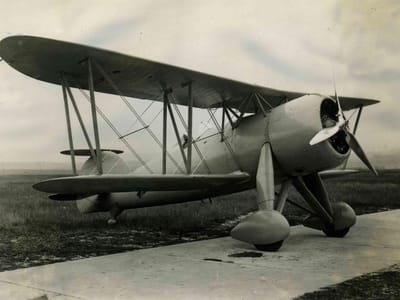
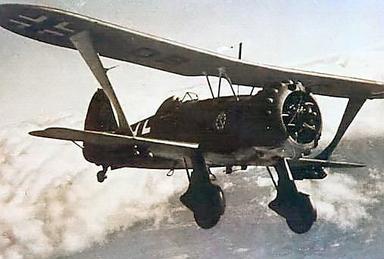
The Henschel Hs 123 was a single-seat biplane dive bomber and close-support aircraft flown by the German aircraft manufacturer Henschel. It was the last biplane to be operated by the Luftwaffe. The Hs 123 started development in 1933 in response to a request for a single-seat biplane dive bomber. Henschel's design team opted to produce an aircraft with all-metal construction, relatively clean lines and a high level of manoeuvrability. Its principal competitor was the Fieseler Fi 98, which was eventually cancelled when the Hs 123 proved to be more promising. On 1 April 1935, the first prototype performed its maiden flight; four prototypes were produced, the fourth of which featured strengthened centre-section struts after two of the earlier prototypes were lost due to structural failures during high speed dives. On its introduction to the Luftwaffe in the autumn 1936, the Hs 123 quickly displaced the Heinkel He 50 biplane, but was viewed as a "stop-gap" until the arrival of the Junkers Ju 87 Stuka. In 1938, the type was dispatched to Spain to fight with the Legion Condor in the Spanish Civil War; the type reportedly performed well, particularly in the psychological impact of its attacks upon the Republicans. The Spanish Nationalists were impressed with the type and opted to procure additional aircraft. The temporarily organized 15th Squadron of the China Central Air Force Academy Group also flew combat missions with its Hs 123s around this time, attacking Imperial Japanese warships along the Yangtze River. The Luftwaffe opted to dispatch the type during the early and middle portions of the Second World War, first deploying it during the Polish Campaign. In 1940, it saw action in the invasions of the Netherlands, Belgium and France in the Battle of France and the early part of the Balkans Campaign. Numerous Hs 123s saw combat during the start of Operation Barbarossa the invasion of the Soviet Union]] in 1941. The Hs 123 proved to be relatively robust, durable and effective in combat, especially in severe conditions (such as those present in the Eastern Front) it was commonly modified in the field to carry additional machine guns, more armour and other changes. It continued to see front-line service until 1944, only to be withdrawn due to a lack of serviceable airframes and spare parts (production ended in the autumn of 1938).