General Dynamics F-111 Aardvark
Overview
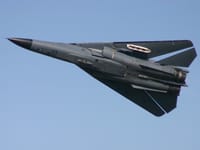
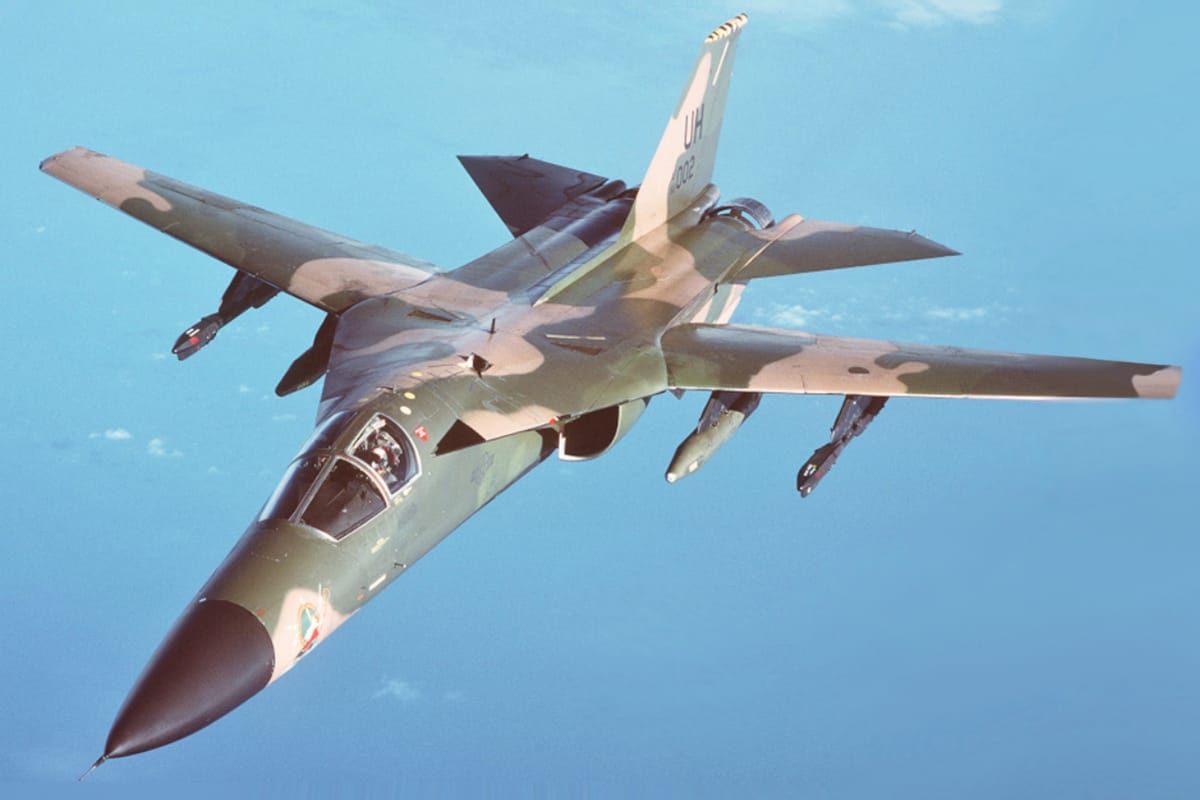
The General Dynamics F-111 Aardvark is a retired supersonic, medium-range, fighter-bomber. Production models of the F-111 had roles that included attack (e.g. interdiction), strategic bombing (including nuclear-weapons capabilities), reconnaissance, and electronic warfare. Its name "Aardvark" comes from a long-nosed, insect-eating African animal. Developed in the 1960s by General Dynamics under Robert McNamara's TFX Program, the F-111 pioneered variable-sweep wings, afterburning turbofan engines, and automated terrain-following radar for low-level, high-speed flight. Its design influenced later variable-sweep wing aircraft, and some of its advanced features have become commonplace. The F-111 suffered problems during initial development, largely related to the engines. A multirole carrier-based fighter/long-range interception variant intended for the United States Navy, the F-111B, was canceled before production. Several specialized models, such as the FB-111A strategic bomber and the EF-111A electronic warfare aircraft, were also developed. The F-111 entered service in 1967 with the United States Air Force (USAF). In the meantime, the Australian government had ordered the F-111C, to replace the English Electric Canberra then used by the Royal Australian Air Force (RAAF). The F-111C entered service with the RAAF in 1973. As early as March 1968, the USAF was deploying F-111s into active combat situations; the type saw heavy use during the latter half of the Vietnam War to conduct low-level ground-attack missions, flying in excess of 4,000 combat missions while incurring only six combat losses in the theatre. The F-111s also participated in the Gulf War (Operation Desert Storm) in 1991; the F-111Fs completed 3.2 successful strike missions for every unsuccessful one, better than any other US strike aircraft used in the operation. RAAF F-111s never saw offensive action, but were deployed periodically as a deterrent, such as for the Australian-led International Force East Timor. Being relatively expensive to maintain amid post-Cold War budget cuts, the USAF elected to retire its F-111 fleet during the 1990s; the last F-111Fs were withdrawn in 1996, while the remaining EF-111s also departed in 1998. The F-111 was replaced in USAF service by the F-15E Strike Eagle for medium-range precision strike missions, while the supersonic bomber role has been assumed by the B-1B Lancer. The RAAF continued to operate the type until December 2010, when the last F-111C was retired; its role was transitioned to the Boeing F/A-18E/F Super Hornet as an interim measure until the Lockheed Martin F-35 Lightning II became available.