Fairey Ultra-light Helicopter
Overview
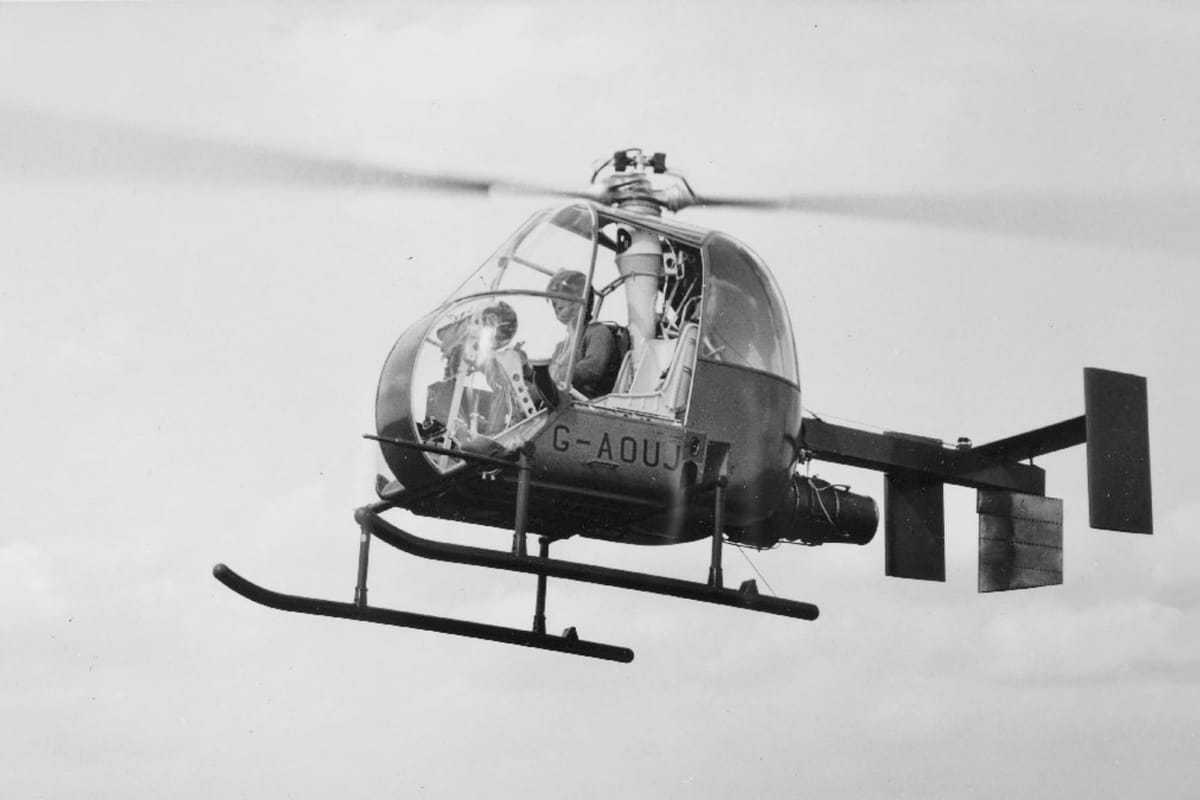
The Fairey Ultra-light Helicopter was a small British military helicopter intended to be used for reconnaissance and casualty evacuation, designed by the Fairey Aviation Company. The Ultra-light had been conceived of as a straightforward, low cost and easily transportable helicopter. It lacked any tail rotor due to the decision to propel the rotorcraft using unconventional tip jets positioned at the ends of the rotor blades. It had been selected amongst various competing projects to meet a Ministry of Supply requirement for a lightweight helicopter to be used by the British Army for aerial observation purposes. Early trials with prototypes proved promising, however political factors ultimately undermined the project. The Ultra-light found itself a casualty of the British defence economies of the later 1950s, as well as of intense competition from rival firms who had their own light rotorcraft projects, in particular the Saunders-Roe Skeeter. While Fairey attempted to proceed with development of the Ultra-light independently, promoting the type towards the civil market and achieving appropriate type certification for such use, no orders were ultimately received. The firm shelved the project, choosing to concentrate on the larger Fairey Rotodyne instead, which shared some design features.