English Electric Lightning
Overview
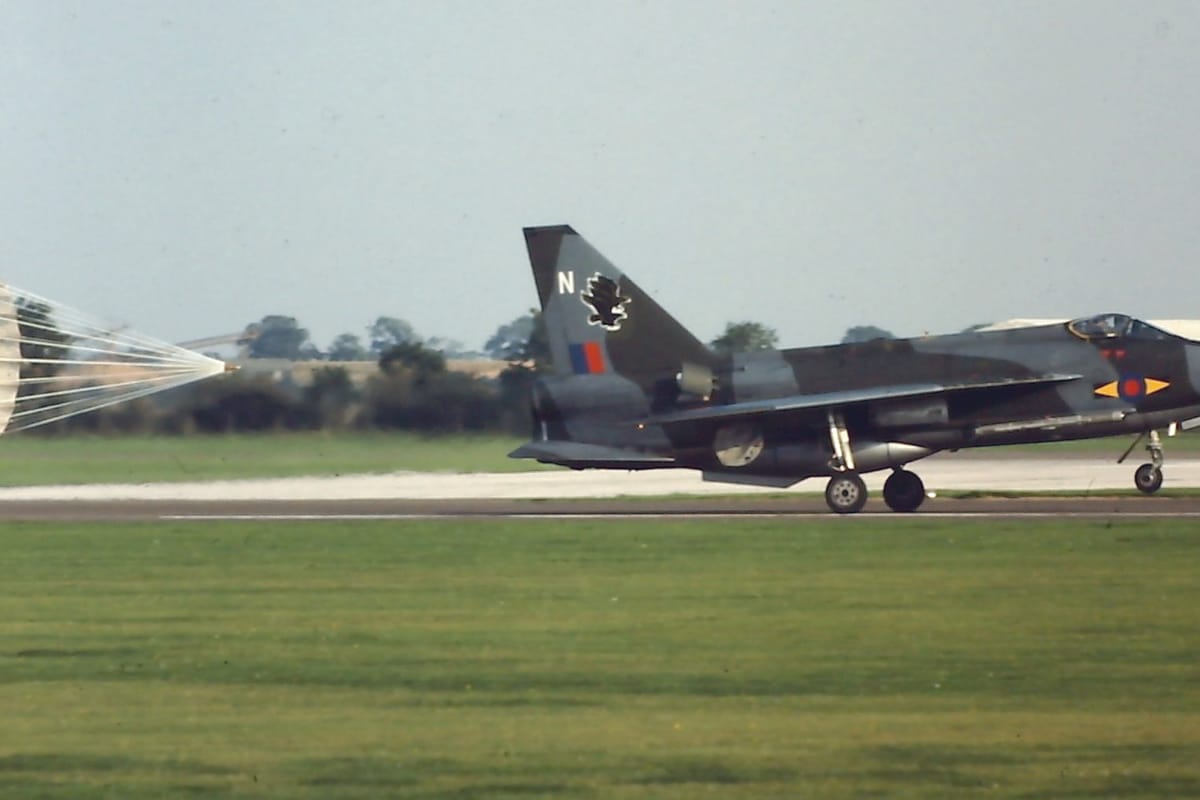
The English Electric Lightning is a British fighter aircraft that served as an interceptor during the 1960s, 1970s and into the late 1980s. It is capable of a top speed above Mach 2. The Lightning was designed, developed, and manufactured by English Electric. After EE merged with other aircraft manufacturers to form the British Aircraft Corporation it was marketed as the BAC Lightning. It was operated by the Royal Air Force (RAF), the Kuwait Air Force (KAF), and the Royal Saudi Air Force (RSAF). An unusual feature of the Lightning's design is the vertically stacked Rolls-Royce Avon turbojet engines, mounted with one over the other within the fuselage. The Short Sperrin similarly used engines mounted above each other, but on the wings. The Lightning was designed and developed as an interceptor to defend the airfields of the British "V bomber" strategic nuclear force from attack by anticipated future Soviet nuclear-armed supersonic bombers such as what emerged as the Tupolev Tu-22 "Blinder", but it was also expected to intercept other bombers such as the Tupolev Tu-16 ("Badger") and the Tupolev Tu-95 ("Bear"). The Lightning has an exceptional rate of climb, ceiling, and speed, and pilots have described flying it as "being saddled to a skyrocket". This performance and the initially limited fuel supply meant that its missions are dictated to a high degree by its limited range. Later developments provided greater range and speed along with aerial reconnaissance and ground-attack capability. Overwing fuel tank fittings were installed in the F.6 variant and extended the range, but limited maximum speed to a reported 1,000 miles per hour (1,600 km/h).