Boeing A160 Hummingbird
Overview
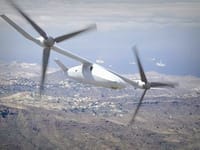
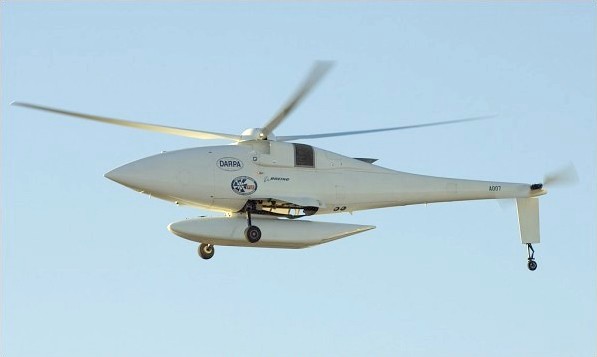
The Boeing A160 Hummingbird (military designation: YMQ-18A) was an unmanned aerial vehicle (UAV) helicopter. Its design incorporated many technologies never before used in helicopters, allowing for greater endurance and altitude than any other helicopter. The development of Hummingbird was initiated for DARPA by Frontier Aircraft in 1998. From 2003 both the US Army and the US Navy shared in funding the project. In May 2004, the company was acquired by Boeing and became integrated into Boeing Phantom Works and then into the Advanced Systems group of Boeing Integrated Defense Systems. Early A160s were powered by modified Subaru automotive engines, but newer versions used Pratt & Whitney PW207D turboshaft engines. The A160 continued with developmental flight tests in 2010, but test flights had already demonstrated greater endurance, higher altitudes, more extensive autonomy, and greater payload. The program had ambitious goals of a 2,500-mile (4,000 km) range, 24-hour endurance, and 30,000 ft (9,100 m) altitude. Flights were largely autonomous, with the aircraft making its own decisions about how to fly so as to meet certain objectives, rather than relying on real-time human control. The A160 achieved maximum speeds of over 140 knots (260 km/h), though endurance and altitude were its goals, not speed. The aircraft measured 35 ft (11 m) from nose to tail and had a rotor diameter of 36 ft (11 m). The project was abandoned by the US Army in December 2012.